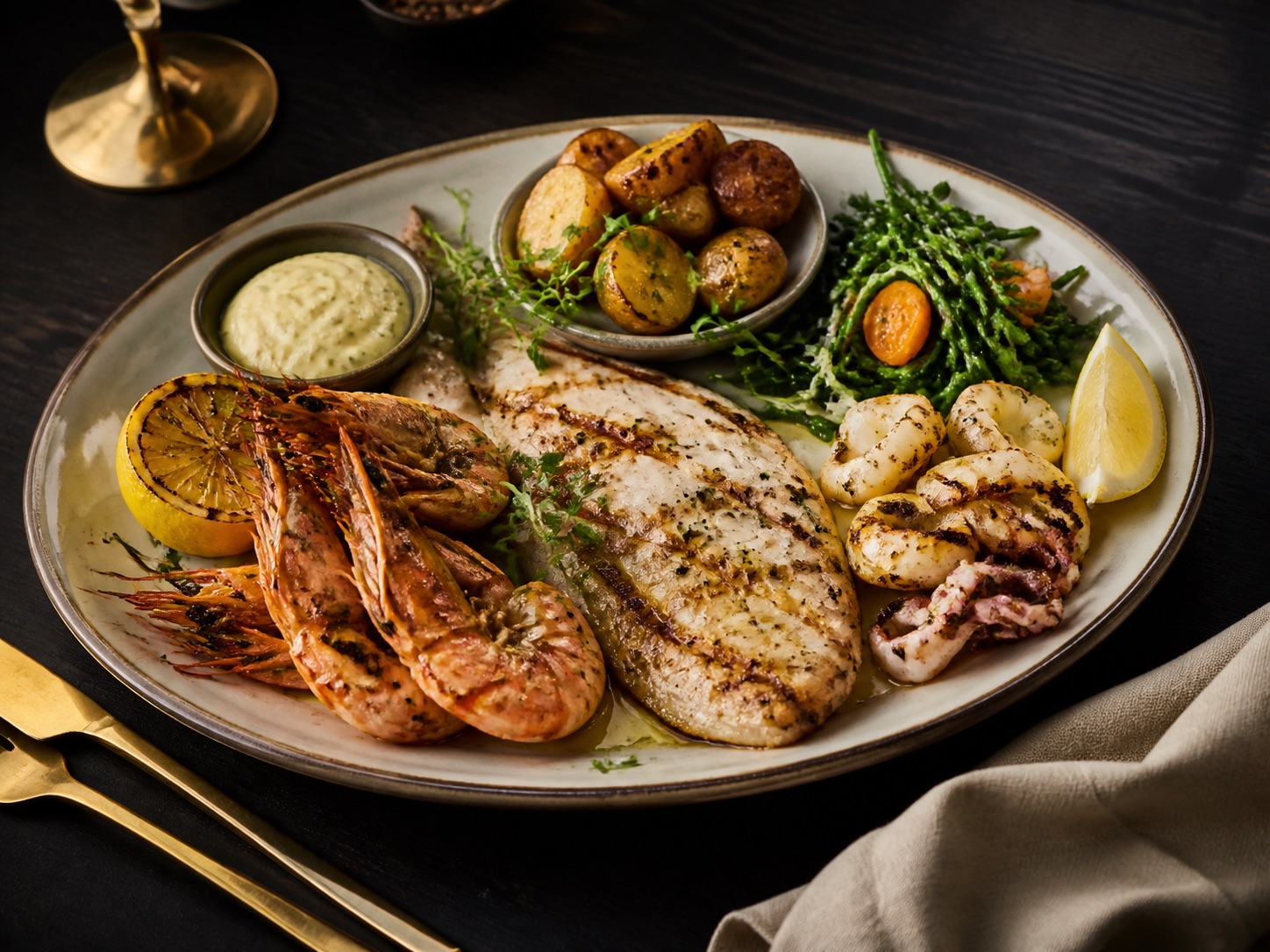
Seafood tastes most convincing when the cooking respects the ingredient and the table feels connected to the coast.
Ask what is available
A coastal menu is not a guarantee that every fish was landed locally that morning. Ask friendly, specific questions: what is fresh, how it is prepared and what the kitchen recommends today. Responsible restaurants will answer honestly when an ingredient is frozen, imported or temporarily unavailable.
Build a balanced table
Begin with one crisp or bright dish, then combine grilled fish, calamari or prawns with vegetables, salad and good bread. Sharing lets a group compare flavours without ordering an oversized platter for spectacle alone. Lemon, herbs and careful heat usually serve fresh seafood better than heavy decoration.
Understand value
Seafood pricing reflects species, supply, portion, preparation and waste. Value is not simply the largest plate. Look for accurate cooking, clean flavour and staff who can explain the menu. Confirm allergens and preparation methods if shellfish or cross-contact is a concern.
The best coastal plate tastes of confidence rather than complication.
Eat with the season
Weather and fishing conditions influence supply. Be willing to change your order and never pressure a kitchen to make claims it cannot support. A thoughtful alternative—perhaps a seasonal vegetable dish or house classic—can be as memorable as the seafood you expected.